
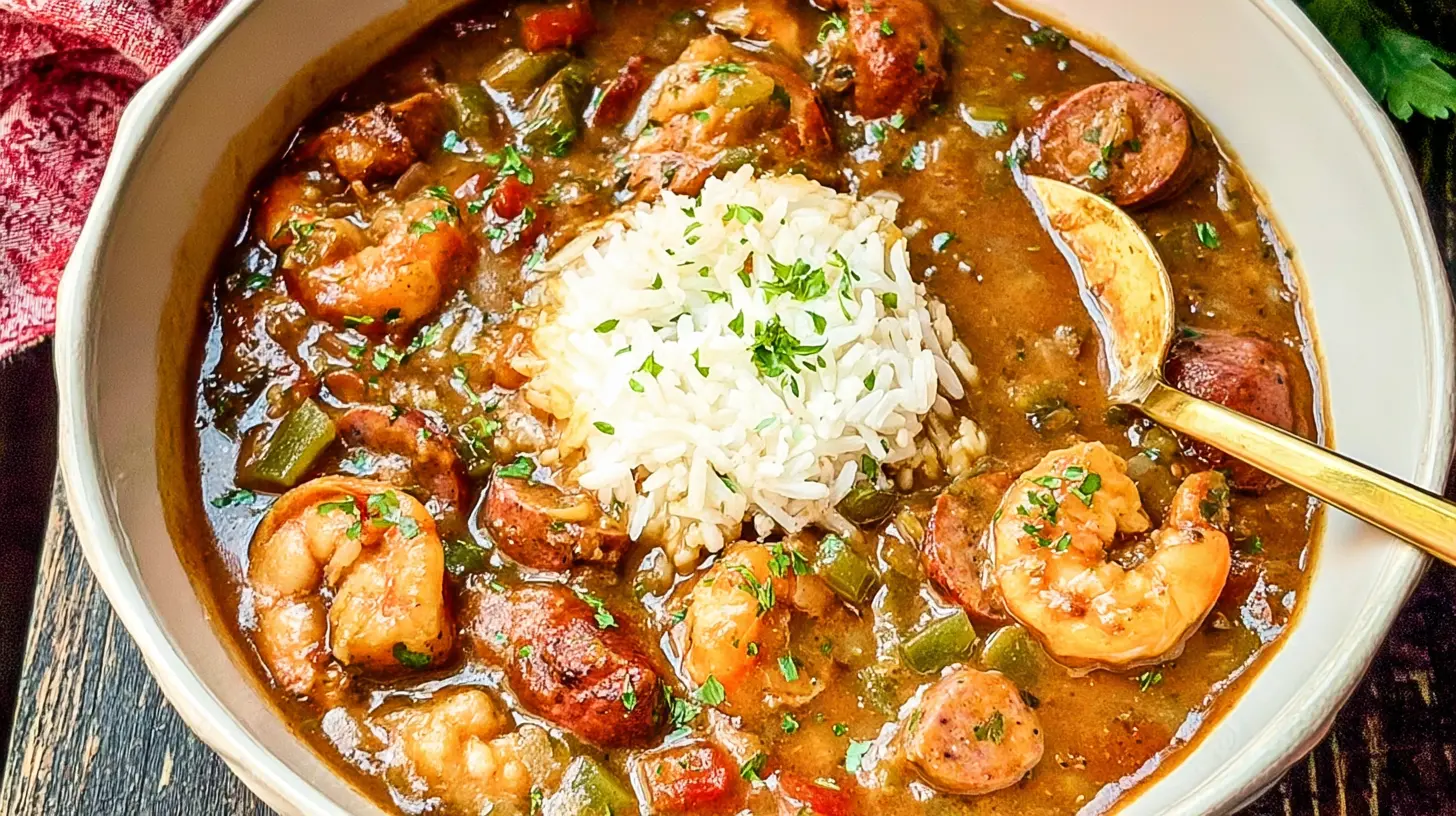
When the first chill of autumn hits, or a long, dreary day leaves you yearning for something truly restorative, my mind immediately drifts to a simmering pot of gumbo. There’s something almost magical about the rich, aromatic scent filling the kitchen, promising a meal that’s not just food, but a warm embrace in a bowl. For me, a truly great Gumbo isn’t just about the ingredients; it’s about layering flavors and soul into every spoonful, transforming simple components into a symphony of comfort.
Why You’ll Love This Dish
This isn’t just another recipe; it’s your ticket to creating a deeply satisfying, incredibly flavorful Gumbo that will chase away any blues. You’ll adore this dish because it’s the epitome of comfort food – hearty, rich, and bursting with a complex flavor profile that develops beautifully with each step. It’s perfect for a cozy family dinner on a cool evening, a celebratory meal with friends, or even as a make-ahead lifesaver for busy weeks. Forget bland meals; this Gumbo guarantees an explosion of taste and warmth, and with our three best comfort food tips, you’ll be cooking like a seasoned Creole chef in no time.
> “I thought making gumbo was intimidating until I tried this recipe. The tips truly made a difference, and my family raved about it! It’s now a staple in our home for those chilly evenings.” – A happy home cook
The Cooking Process Explained
Making this Gumbo is a journey of layers, starting with the heart and soul of any good gumbo: the roux. You’ll slowly develop a rich, dark roux, transforming flour and fat into a nutty, deeply flavorful base. Then, aromatic vegetables — the “holy trinity” of Cajun and Creole cooking — are sauteed to build another layer of flavor. Next, comes the comforting broth, seasoned perfectly before introducing your chosen meats and seafood. Finally, a gentle simmer allows all those wonderful flavors to meld into a cohesive, soul-warming stew. It sounds like a lot, but each step is straightforward and incredibly rewarding.
What You’ll Need
Gather these items to create your extraordinary Gumbo:
- 1 cup all-purpose flour
- 1 cup vegetable oil (or other neutral oil)
- 2 large yellow onions, chopped
- 2 green bell peppers, chopped
- 4 stalks celery, chopped
- 4 cloves garlic, minced
- 8 cups chicken broth (or seafood broth if primarily using seafood)
- 1 lb boneless, skinless chicken thighs or breasts, cut into 1-inch pieces
- 1 lb smoked sausage (andouille or kielbasa work well), sliced
- 1 lb large shrimp, peeled and deveined
- 1 can (14.5 oz) diced tomatoes (optional, for a Creole twist)
- 1 tbsp Creole seasoning (store-bought or homemade)
- 1 tsp dried thyme
- 1/2 tsp cayenne pepper (or to taste)
- 2 bay leaves
- Salt and freshly ground black pepper to taste
- Fresh parsley, chopped (for garnish)
- Cooked white rice, for serving
- Hot sauce, for serving (optional)
A note on ingredients: While chicken and sausage are classic, feel free to adapt! Some prefer duck, or a mix that includes crab. The diced tomatoes are key if you’re leaning more towards a Creole style; omit them for a purer Cajun gumbo.
Directions to Follow
Here’s how to bring your Gumbo to life:
- Make the Roux (Tip #1: Patience is Key for the Roux): In a large, heavy-bottomed pot or Dutch oven, heat the oil over medium heat. Slowly whisk in the flour until smooth. Continue to cook, stirring constantly (and I mean constantly!), for 25-40 minutes, or until the roux reaches a dark chocolate color. This takes patience, but it’s crucial for flavor. Do not rush or burn it!
- Sauté Aromatics: Once the roux is dark, immediately add the chopped onions, bell peppers, and celery. Stir well to coat them in the roux. Cook for about 8-10 minutes, stirring occasionally, until the vegetables soften. Add the minced garlic and cook for another minute until fragrant.
- Build the Broth: Slowly pour in the chicken broth, whisking constantly to prevent lumps. Add the Creole seasoning, dried thyme, cayenne pepper, and bay leaves. Bring to a simmer, then reduce the heat to low, cover, and let it cook for at least 30 minutes, or up to an hour, allowing flavors to meld.
- Add Meats: Stir in the chicken pieces and sliced sausage. If using, add the diced tomatoes. Return to a gentle simmer and cook for 15-20 minutes, or until the chicken is cooked through.
- Finish with Shrimp (Tip #2: Don’t Overcook the Seafood): Just before serving, add the peeled and deveined shrimp to the simmering gumbo. Cook for only 3-5 minutes, or until the shrimp turn pink and opaque. Overcooked shrimp are tough, so watch them closely!
- Season and Serve: Remove the bay leaves. Taste and adjust seasoning with salt, pepper, and more cayenne if desired. Ladle the hot gumbo over cooked white rice. Garnish with fresh chopped parsley and serve with hot sauce on the side for those who like an extra kick.
How to Serve Your Gumbo
Gumbo is typically served hot, generously ladled over a scoop of fluffy white rice. The rice isn’t just a side; it’s an integral part of the meal, soaking up that rich, flavorful broth. For an extra touch, offer a bottle of your favorite hot sauce on the side for those who enjoy a bit more heat. Some people also like to serve gumbo with a side of cornbread or crusty French bread for dipping. To make it visually appealing, sprinkle a little fresh parsley over each bowl just before serving – the green color provides a lovely contrast to the deep amber of the gumbo.
Keeping Leftovers Fresh
Gumbo is one of those dishes that often tastes even better the next day as the flavors continue to deepen. To store, allow it to cool completely before transferring it to airtight containers. It will keep beautifully in the refrigerator for 3-4 days.
For longer storage, gumbo freezes exceptionally well! Portion it into freezer-safe containers or heavy-duty freezer bags (leaving some headspace if using containers, as liquids expand). It will maintain its quality in the freezer for up to 3 months. To reheat, thaw overnight in the refrigerator if frozen, then gently warm on the stovetop over low heat, stirring occasionally. You may need to add a splash of broth or water to reach your desired consistency.
A note on safety: Always ensure leftovers are reheated thoroughly to an internal temperature of 165°F (74°C) before serving.
Helpful Cooking Tips
- Tip #3: Taste, Taste, Taste: Gumbo is all about balance. Taste your gumbo at every stage, especially before serving. Does it need more salt? A pinch more cayenne? A dash of black pepper? Trust your palate!
- Don’t Rush the Roux: As mentioned in the directions, the roux is paramount. Low and slow is the secret. A dark roux adds a depth of flavor and a beautiful color that a quick, light roux just can’t replicate. Walk away from the stove for too long, and you risk burning it, which means starting over!
- Prep Ahead: Chop all your vegetables, measure your spices, and prepare your meats before you even start the roux. Gumbo-making is a continuous process once you begin, and having everything ready makes it much smoother.
Recipe Variations
Feeling adventurous? Here are some ways to put your own spin on this comforting Gumbo:
- Seafood Lover’s Gumbo: Omit the chicken and sausage entirely. Instead, use a mix of shrimp, crab meat (fresh or frozen lump crab is excellent), and even oysters (added in the last 5 minutes of cooking). Use seafood broth for the base.
- Vegetarian Gumbo: This might sound like a stretch, but a delicious vegetarian gumbo is possible! Skip the meats, use vegetable broth, and load up on hearty vegetables like okra, zucchini, corn, and lima beans. You can also add some smoked paprika to mimic a smoky flavor.
- Spicier Kick: If you love heat, increase the amount of cayenne pepper, or add a diced jalapeño or serrano pepper along with the “holy trinity.”
Common Questions
How long does it take to make a good roux?
A truly good, dark roux for gumbo can take anywhere from 25 to 45 minutes of constant stirring over medium heat. It’s a commitment, but it’s where much of the gumbo’s depth of flavor comes from. Don’t stop stirring and don’t rush it!
Can I make this Gumbo ahead of time?
Absolutely! Gumbo is an excellent make-ahead dish. You can prepare the entire gumbo (excluding the shrimp, which should always be added fresh when reheating) a day or two in advance. Store it in the refrigerator, and then gently reheat on the stovetop, adding the shrimp in the last few minutes before serving. The flavors often deepen overnight.
What kind of sausage is best for Gumbo?
Andouille sausage is traditionally preferred for its smoky, spicy flavor which complements gumbo perfectly. If you can’t find andouille, a good smoked kielbasa or another high-quality smoked pork sausage will work well. Avoid fresh, unsmoked sausages as they won’t provide the same depth.
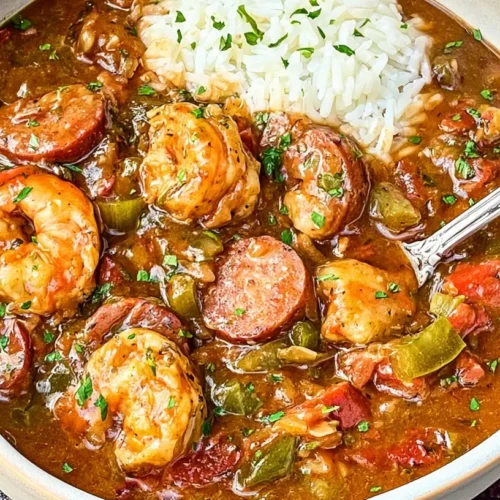
Authentic Cajun Chicken and Sausage Gumbo
Equipment
- large, heavy-bottomed pot or Dutch oven
- whisk
Ingredients
For the Roux
- 1 cup all-purpose flour
- 1 cup vegetable oil (or other neutral oil)
The Aromatics (Holy Trinity)
- 2 large yellow onions, chopped
- 2 bell peppers (any color, green is classic), chopped
- 4 stalks celery, chopped
- 4 cloves garlic, minced
Meats
- 1 lb smoked sausage (andouille is traditional), sliced into 1/2-inch rounds
- 1 lb boneless, skinless chicken thighs, cut into 1-inch pieces
- 1 lb peeled and deveined shrimp, thawed if frozen, added at the very end Optional
Liquids & Seasoning
- 8 cups chicken stock (low sodium is good for control)
- 1 14.5 oz can diced tomatoes, undrained Optional
- 1/2 cup chopped fresh parsley
- 1/4 cup chopped green onions (for garnish)
- 2-3 bay leaves
- 1 tbsp Cajun seasoning (or to taste)
- 1 tsp dried thyme
- Salt and freshly ground black pepper to taste
- Hot sauce (e.g., Tabasco or Crystal), for serving
- Filé powder (optional, for thickening and authentic flavor, added after cooking)
Instructions
Prepare Your Roux
- In a large pot, combine oil and flour and whisk continuously over medium heat for 25-45 minutes until a rich chocolate brown roux forms; do not rush or stop stirring.
Sauté Aromatics
- Once the roux is ready, immediately add chopped onions, bell peppers, and celery, stirring to coat; cook for 8-10 minutes until softened, then add minced garlic and cook for another minute until fragrant.
Add Meats & Seasoning
- Stir in sliced smoked sausage and chicken pieces, cooking for 5-7 minutes until the chicken is lightly browned; then, add Cajun seasoning, dried thyme, salt, and pepper, stirring to combine for another minute.
Simmer the Gumbo
- Pour in chicken stock, bay leaves, and diced tomatoes (if using), bring to a boil, then reduce heat to low, cover, and simmer for 1-2 hours, stirring occasionally for optimal flavor melding.
Finish & Serve
- If adding shrimp, stir them in during the last 5-7 minutes until pink and opaque, then remove bay leaves, stir in fresh parsley, and add filé powder directly to individual bowls just before serving.
Garnish & Enjoy
- Ladle the gumbo over steamed white rice, then garnish with chopped green onions and offer hot sauce on the side for those who prefer extra heat.